Business · Viral Post
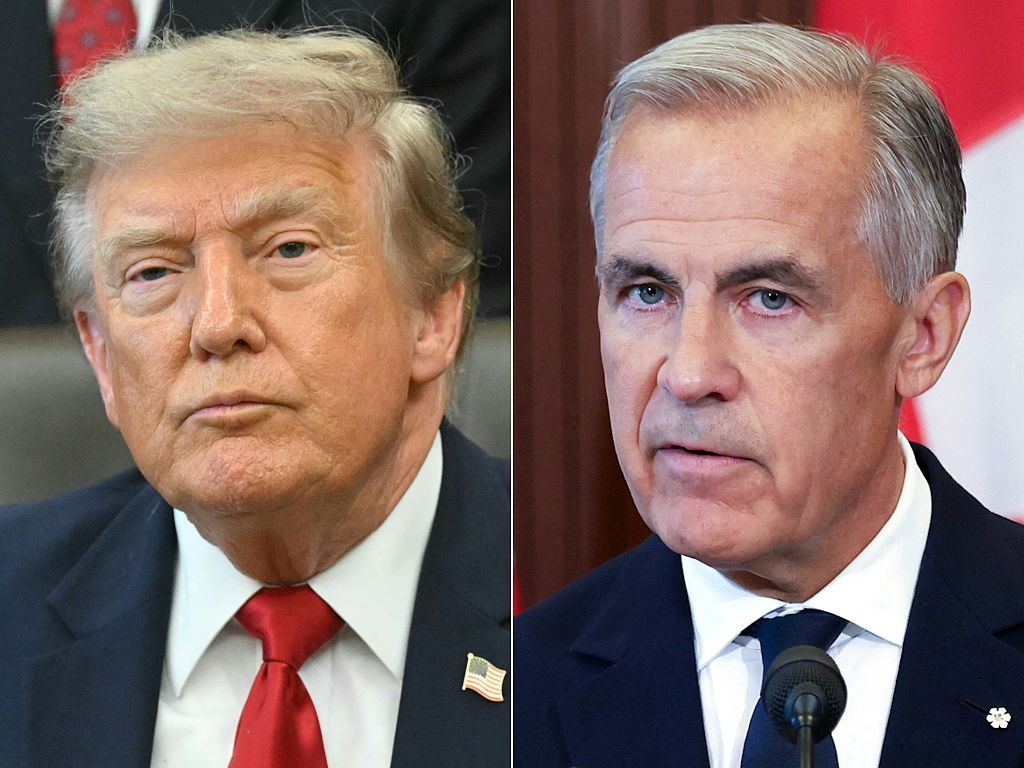
Canada is offering businesses a tax advantage over the United States to attract investment and create jobs, as Prime Minister Mark Carney seeks to make the country less dependent on its southern neighbor. The proposed incentive would reduce Canada’s marginal effective tax rate on new business investment, a measure of the tax burden on an additional dollar invested, to 6.4 percent from 13 percent, according to government calculations. The comparable U.S. rate is 16.9 percent.
The proposal is a centerpiece of Carney’s second federal budget, titled "Masters of our Destiny." He took office in March 2025. Read More on Politics The productivity mega deduction is part of a three-pronged approach to creating what the Canadian government calls an “investment supercycle” through measures to spur investment, entrepreneurship and innovation. Canada’s Finance Minister Francois-Philippe Champagne, who delivered the budget to the Canadian Parliament in Ottawa on Thursday, said: "At its core, our plan is about changing Canada's growth model." In a statement ahead of the budget, Champagne said the goals include boosting domestic commerce within Canada and "diversifying our trade" with neighbors.
"No matter what happens south of the border, no matter what happens in the world, we will be more resilient, we will be stronger, we will be more independent,” he added. Carney has also argued that the trading relationship with Washington has changed permanently and that Canada cannot count on a return to the largely tariff-free access it previously enjoyed. Ottawa says its proposed investment incentive would allow businesses to write off a much wider range of investments immediately.
The government’s pitch connects lower investment costs with expansion, better productivity and employment. Inside the Plan The deduction would let businesses claim the full cost of eligible assets in the year they become available for use, rather than spreading deductions over time. The Canadian government says the proposal would expand immediate expensing from roughly 15 percent of investment in capital assets to about two-thirds Examples include computer equipment, software, fiber-optic cable, mining property and rail infrastructure.
Ottawa also proposes making immediate expensing permanent, giving businesses more certainty when planning investment. ... Champagne explicitly linked the policy to businesses expanding in Canada and “creating high-paying careers." The Canadian Finance Department estimates an additional C$36 billion ($27.7 billion USD) fiscal cost over five years, beginning in 2026-27. The department forecasts long-term employment gains reaching up to 80,000 jobs annually 10 years from now.
It does not identify those jobs as transfers from the United States. Speaking at the September 15 Canada Investment Summit where the plan was announced, Carney said: “Your investment dollars will go a lot further in Canada." Competing With America Trump wants companies to build and hire in America, but Canada is making a rival offer: invest north of the border and keep more of your money. Ottawa says its tax plan would give new business investment an effective tax rate of 6.4 percent, against 16.9 percent in the United States even after accounting for Trump’s One Big Beautiful Bill Act.
That act, signed into law on July 4, 2025, included business tax breaks allowing companies to deduct the full cost of eligible equipment immediately, rather than over several years. It also restored immediate deductions for domestic research spending. There are signs Canada's proposal could influence Canadian businesses’ investment plans A recent KPMG survey of 346 Canadian business owners and decision-makers found that 51 percent believed the deduction would encourage new capital investment, while 49 percent said it would increase their investment in Canada.
The respondents were members of the Angus Reid Forum, and the survey measured expectations rather than completed investment. It measures intentions, not completed spending, but the findings suggest the policy could affect both the size and timing of projects. Among respondents in agriculture, automotive, construction and manufacturing, 69 percent said it would encourage new investment.
The survey does not show that this money would otherwise have gone south of the border. Lachlan Wolfers, National Leader at KPMG Law, explained to Newsweek : "It is not the only factor that guides investment decisions as between whether that occurs in Canada or in the US. It's one key pillar of part of a broader package.
"The productivity mega deduction effectively gives you immediate expensing of capital expenditure, so it is most beneficial in industries that are capital intensive, which includes things like mining, oil and gas projects, transportation, telecommunications, manufacturing, agriculture, even data centres that is actually a significant component of what is driving the Canadian economy." What Other Measures Are Being Announced? The budget will also fund major projects Carney sees as essential to reducing Canada’s economic dependence on the United States, including energy infrastructure and critical mineral mines. The 511-page budget document also includes a new Canada Growth Incentive program that the government said will strengthen Canada’s tax competitiveness for businesses.
The program’s lead measure is a new tax exemption on up to CA$15 million in capital gains earned on successful eligible investments. The tax break would apply to shares issued between budget day and 2037 by a corporation with a value of up to CA$100 million and held for at least 36 months. The measure is expected to cost CA$80 million in 2029-2030 and CA$485 million in 2030-2031.
The budget also enhances the small business rollover of taxes when capital gains are reinvested in another Canadian small business. Champagne has also promised help for workers in industries hit by Trump’s tariffs, including auto manufacturing and steel. Speaking in the Canadian Parliament, Champagne said: "The moment in front of us is serious.
Canadians know it, our new government knows it. "The moment demands an ambitious plan to be 'Masters of our own Destiny'." The Canadian Finance Minister went on: "Our greatest strength is something that cannot be found on a balance sheet - trust. Trust is what defines Canada in an uncertain world.
The world wants to engage with Canada. "We are making it easier for businesses to choose Canada and we're also making Canada the global partner of choice." He pointed out: "Not every Canadian business is in a position to invest today. Many have been hard hit with unjustified US tariffs.
"I think tonight about the steelworkers in Hamilton, I'm thinking about the aluminum workers in Saguenay, I'm thinking about the forestry workers in British Columbia, I'm thinking about the auto workers in Windsor and Oshawa who are affected and understandably worried. "Canada's new government has one simple message for them today: "We will be there for you with whatever it takes, as long as it takes." Canada’s Parliamentary Budget Officer estimated in October that bilateral trade measures introduced since early 2025 would leave Canadian real GDP 1.4 percent lower after five years than under a baseline maintaining the 2024 trading relationship. The watchdog also cautioned that actual trade outcomes reflect commodity prices, global growth and exporters’ adjustments, alongside tariffs. ...
Genevieve Tellier, a political scientist at the University of Ottawa, told AFP that delivering the budget would partly depend on “the impact of tariffs,” including whether U.S. duties trigger further job losses. The Canadian government also faces pressure from rising borrowing costs. The Bank of Canada raised interest rates last month for the first time in three years as it sought to contain inflation fueled by surging energy prices during the Iran war.
Trade Tariffs Impacting Both Sides of the Border Trade Minister Dominic LeBlanc said Canada will continue trade negotiations with the Trump administration following the U.S. midterm elections. Speaking to reporters in Ottawa, LeBlanc congratulated the election winners but said Canada’s “focus hasn’t changed" and stressed that the budget would continue the government’s push to tackle affordability, advance major projects and diversify trade relationships. But the U.S-Canada trade fight is still being felt by businesses and consumers.
Canada’s current counter-tariff list includes charges of 50 percent on U.S .-made wooden bedroom furniture and 25 percent on household refrigerators. Those duties increase the cost of importing affected goods; however, a 50 percent tariff does not automatically mean a 50 percent increase at the checkout. Meanwhile, some suppliers have already passed on higher costs.
A September notice from Canadian building-products distributor Convoy Supply announced increases of about 5–17 percent on affected SFS products, effective September 14. The notice blamed additional Canadian counter-tariffs and said the adjustment was limited to “affected US-origin content rather than applying a general increase”. American buyers face charges too.
A separate Sagiper notice maintained a “10% Global Tariff Surcharge” on orders shipped from its Florida distribution facility. It also announced July price increases of 5 percent on specified PVC panels and trims, and 9 percent on aluminum battens and certain composite panels. The notice links the surcharge to U.S. federal tariff policies but does not attribute every underlying price increase to tariffs.
Research has also revealed that shoppers can absorb part of the tariff bill. Bank of Canada researchers tracking Canadian online retail prices found that tariffed products became about 6 percent more expensive relative to a control group by mid-June 2025. For American alcohol producers, Canadian retaliation has meant a sharp loss of customers.
The Wine Institute says U.S. wine exports to Canada plunged 78 percent in 2025, from $460 million to $103 million, following provincial restrictions on American alcohol. California’s McManis Family Vineyards told The Sacramento Bee that Canadian shipments fell from roughly 75,000 cases to about 1,000 between July 2025 and July 2026. ... The family put the winery and vineyard up for sale.
“It was a very hard decision for myself and my family,” president and co-owner Ron McManis told the newspaper in September. The business also faced a significant decline in bulk wine sales, underscoring the wider pressures facing the industry. American distillers have reported job losses too, with Chris Swonger, president of the Distilled Spirits Council of the United States, telling Buffalo Toronto Public Media in May that U.S. distilleries had lost about 1,000 jobs after exports to Canada fell by more than 60 percent.
“We’ve seen a reduction in jobs,” he said. “And small craft distilleries in the United States are feeling that pressure.” That is the industry group’s estimate, rather than an independently established count of jobs lost solely to Canadian restrictions. Weaker demand and excess supply have also strained producers, making it difficult to separate the damage caused by the trade dispute from the industry’s broader downturn.
Contact Newsweek editors on this story: Gray R. Thomas
Source: Newsweek